

What a Cohesive Team Actually Looks Like — Five Behaviors Recap
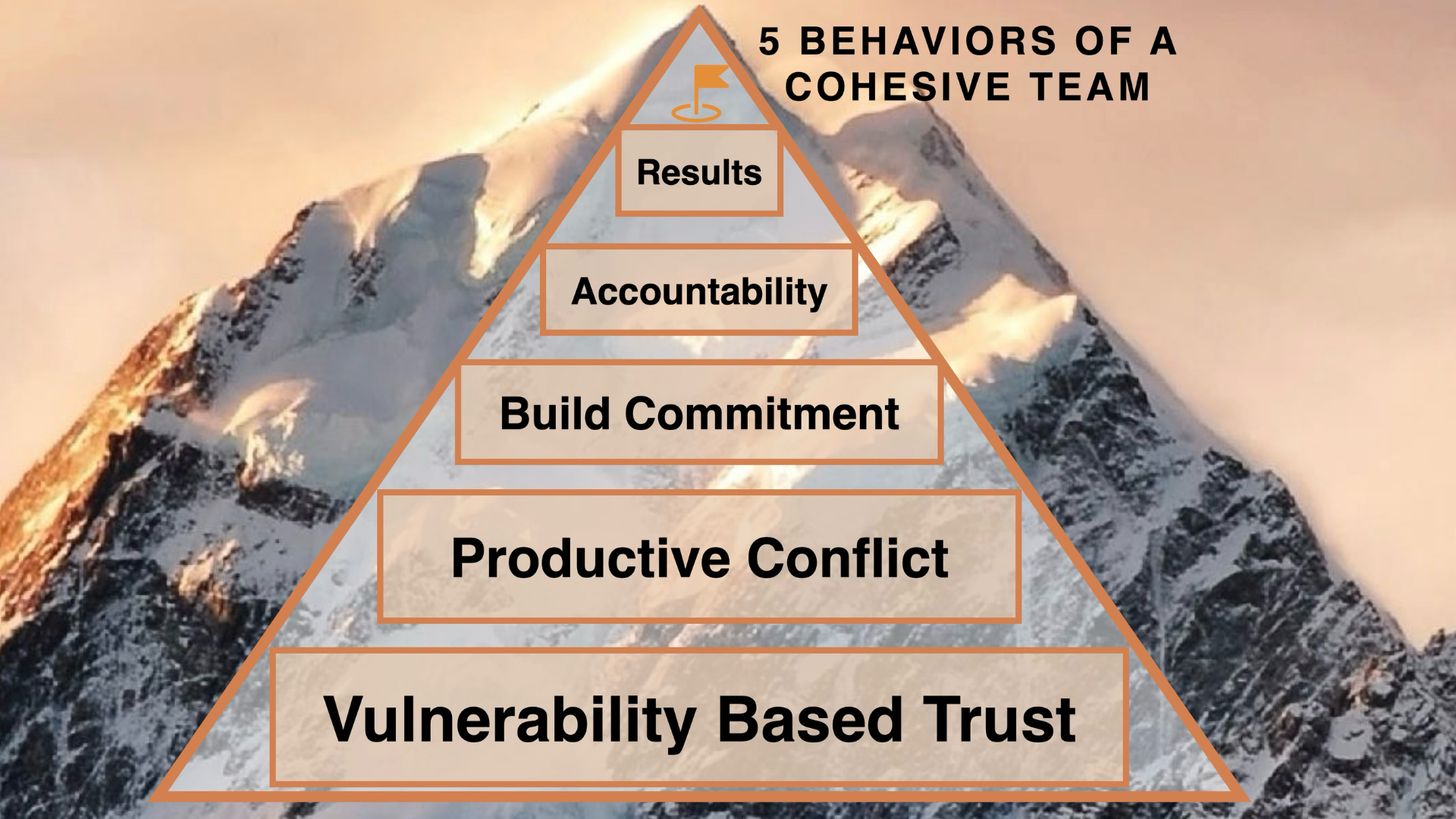
Patrick Lencioni’s Fire Behaviors Pyramid
Six weeks ago I started this series with a question: why do so many teams — talented, well-resourced, well-intentioned teams — still struggle to perform at the level they're capable of?
The answer, as Lencioni laid it out and as I've witnessed in 28 years of working with teams, comes down to five things. Five behaviors that build on each other like a pyramid — and that, when they're all in place, create something genuinely rare.
A cohesive team.
---
I want to tell you what a cohesive team actually looks like in practice. Not in theory. Not in a model. In real life.
It looks like a meeting where someone pushes back on the leader's idea — and the leader says "good point, I hadn't thought of it that way." And nobody is surprised, because that's just how things work here.
It looks like a conversation where someone admits they're behind on a deliverable before anyone asks — because they trust that the response will be support, not judgment.
It looks like a team that disagrees sharply in the room and then walks out unified behind the decision — because they know their voices were heard and the process was fair.
It looks like someone saying to a colleague "hey, I noticed you've been missing some deadlines — is everything okay?" with genuine care, not accusation. And the colleague actually answering honestly.
It looks like a team that celebrates a win together — without the undercurrent of who deserves the most credit.
That team exists. I've been in rooms with them. And they are different in ways you feel before you can articulate.
---
Here's what I want to be honest about: getting there is hard.
Not because the model is complicated — it isn't. But because it requires people to do things that don't come naturally in most professional environments. To be vulnerable. To disagree out loud. To commit even when they're uncertain. To hold each other to account. To put the team before themselves.
These are skills. And like all skills, they take practice.
That's what I do, in the work I bring into organizations. I create the container. The retreat, the facilitated workshop, the business simulation, the assessment — they're all different ways of creating a space where people can practice being real with each other. And then we take that back into the work.
---
The behavior that comes up most when I talk to teams? Accountability. Almost every team knows exactly who isn't being held accountable, and exactly why nobody is saying anything about it.
The second most common? Conflict — or the lack of it. The thing not being said in the room that's slowly poisoning everything.
If that's where your team is, I want you to know: it's fixable. I've seen it happen. Teams that couldn't be in the same room without tension learning to trust each other. Leaders who never admitted uncertainty becoming the person their team rallies around because of their honesty.
It starts with awareness. With naming what's actually happening.
And then it starts with someone being willing to go first.
---
If this series has been useful to you — share it with your team. Start the conversation. Ask them where they think you're stuck on the pyramid.
And if you want to bring the Five Behaviors of a Cohesive Team into your organization — I'd love to talk about what that could look like.
Which of the five behaviors does your team need most right now?
